

Introduction
In today’s hyper-connected digital economy, a website is often the first point of contact between a business and its customers. Whether it is an e-commerce store, a corporate portal, a blog, or a SaaS application, every website represents a doorway into an organization’s data, reputation, and revenue stream. Unfortunately, this same doorway is also a prime target for cybercriminals. Website security is no longer an optional technical afterthought — it is a fundamental business requirement that determines whether an organization survives a cyberattack or becomes another statistic in the growing list of data breach victims.
This article explores why website security matters, the real-world consequences of neglecting it, the most common threats websites face, and the foundational principles every organization should adopt to protect their digital assets.
The Scale of the Problem
Cyberattacks against websites happen constantly, and the numbers are staggering. Automated bots scan the internet around the clock, probing for outdated software, weak passwords, misconfigured servers, and unpatched vulnerabilities. It is not just large corporations that are targeted; small and medium-sized businesses are often seen as easier targets precisely because they tend to invest less in security infrastructure.
A single successful attack can result in stolen customer data, defaced web pages, malware distribution to visitors, complete loss of access to business-critical systems, or a website being used as a launchpad for attacks against other systems. The financial and reputational fallout from such incidents can be devastating, especially for smaller organizations that lack the resources to recover quickly.
Why Website Security Matters: Key Reasons
1. Protecting Sensitive Data
Websites routinely collect and store sensitive information — names, email addresses, phone numbers, payment details, passwords, and sometimes health or financial records. If this data is not properly protected, it becomes an attractive target for hackers who can sell it on the dark web, use it for identity theft, or leverage it for further attacks such as phishing campaigns. Data protection regulations like GDPR, CCPA, and various national data protection laws also impose legal obligations on businesses to secure user data, with severe financial penalties for non-compliance.
2. Maintaining Customer Trust
Trust is the currency of the digital world. Customers share their personal and financial information with a website because they believe it will be handled responsibly. A single security breach can shatter that trust instantly. Studies consistently show that a significant percentage of customers stop doing business with a company after learning their data was compromised in a breach. Rebuilding trust after a security incident takes far longer, and costs far more, than investing in preventive security measures from the start.
3. Avoiding Financial Losses
The financial impact of a security breach extends well beyond the immediate cost of fixing the vulnerability. Organizations often face costs related to forensic investigations, legal fees, regulatory fines, customer notification requirements, credit monitoring services for affected users, and lawsuits. Additionally, there is the indirect cost of lost business due to downtime and reputational damage. For many small businesses, a major breach can be an existential threat that leads to closure.
4. Preventing Search Engine Blacklisting
Search engines like Google actively scan websites for malware, phishing content, and other malicious activity. If a website is compromised and used to distribute malware or host phishing pages, search engines may flag it with warnings or remove it from search results entirely. This “blacklisting” can devastate organic traffic and take weeks or months to resolve, even after the underlying security issue has been fixed.
5. Ensuring Business Continuity
Many businesses today depend entirely on their website for revenue generation, whether through direct sales, lead generation, or service delivery. A successful attack — particularly a ransomware attack or a Distributed Denial of Service (DDoS) attack — can take a website offline for hours or even days. This downtime translates directly into lost revenue and can disrupt supply chains, customer service operations, and internal workflows that depend on the same infrastructure.
6. Meeting Legal and Regulatory Requirements
Depending on the industry and geography, websites may be subject to a wide range of compliance requirements. E-commerce sites handling payment cards must comply with the Payment Card Industry Data Security Standard (PCI DSS). Healthcare-related websites in the United States must consider HIPAA requirements. Websites serving European users must comply with GDPR. Non-compliance can result in significant fines, legal action, and loss of the ability to process certain types of transactions.
Common Threats That Make Security Essential
Understanding the threat landscape helps illustrate why a proactive security posture is necessary rather than a reactive one.
Malware and Ransomware: Attackers exploit vulnerabilities to inject malicious code into a website, which can then infect visitors’ devices, steal data, or hold the website’s own files hostage in exchange for a ransom payment.
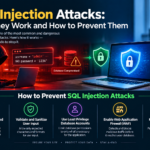
SQL Injection: By manipulating input fields, attackers can trick a website’s database into executing unauthorized commands, potentially exposing or destroying entire databases of sensitive information.
Cross-Site Scripting (XSS): Attackers inject malicious scripts into web pages viewed by other users, allowing them to steal session cookies, redirect users to malicious sites, or deface content.
Brute Force Attacks: Automated tools attempt thousands of username and password combinations to gain unauthorized access to admin panels, content management systems, or user accounts.
DDoS Attacks: Attackers flood a website with overwhelming traffic, causing it to slow down or become completely inaccessible to legitimate users.
Man-in-the-Middle Attacks: Without proper encryption, data transmitted between a user’s browser and a website’s server can be intercepted and read or altered by attackers.
Outdated Software Exploits: Content management systems, plugins, and server software that are not regularly updated often contain known vulnerabilities that attackers actively search for and exploit.
Foundational Principles of Website Security
Defense in Depth
No single security measure is sufficient on its own. A layered approach — combining firewalls, encryption, access controls, monitoring, and regular updates — ensures that if one layer fails, others remain in place to prevent or limit damage.
Principle of Least Privilege
Users, applications, and processes should only have the minimum level of access necessary to perform their functions. This limits the potential damage if an account or system component is compromised.
Regular Updates and Patch Management
Software vulnerabilities are discovered constantly. Keeping content management systems, plugins, server software, and dependencies up to date closes known security gaps before attackers can exploit them.
Strong Authentication
Implementing strong password policies, multi-factor authentication, and secure session management significantly reduces the risk of unauthorized access, even if credentials are partially compromised.
Encryption Everywhere
Data should be encrypted both in transit (using HTTPS/TLS) and at rest (in databases and storage systems). Encryption ensures that even if data is intercepted or stolen, it remains unreadable without the proper decryption keys.
Continuous Monitoring and Logging
Security is not a one-time setup but an ongoing process. Continuous monitoring, logging of access and error events, and automated alerting allow organizations to detect and respond to suspicious activity before it escalates into a full-blown breach.
Regular Backups
Maintaining regular, tested backups ensures that even in the worst-case scenario of a successful attack, a business can restore its website and data without paying a ransom or suffering permanent data loss.
Building a Security-First Culture
Technical controls alone are not enough. Organizations must cultivate a culture where security is everyone’s responsibility, not just the IT department’s. This includes training employees to recognize phishing attempts, establishing clear incident response procedures, conducting regular security audits and penetration testing, and staying informed about emerging threats.
Developers should be trained in secure coding practices from the outset, since it is far cheaper and more effective to build security into an application during development than to bolt it on afterward. Security should be part of every stage of the software development lifecycle, a concept often referred to as “DevSecOps” or “shift-left security.”
Conclusion
Website security is not merely a technical checkbox — it is a critical business function that protects revenue, reputation, customer relationships, and legal standing. As cyber threats continue to evolve in sophistication and frequency, organizations that treat security as an ongoing priority rather than a one-time project will be far better positioned to withstand attacks and maintain the trust of their users.
Investing in website security is ultimately an investment in business resilience. The cost of prevention is almost always far lower than the cost of recovery from a successful attack. In the chapters that follow in this series, we will dive deeper into specific attack types — including SQL injection, cross-site scripting, DDoS attacks, and the role of SSL/TLS encryption — to give you a practical, end-to-end understanding of how to protect your website from the threats it faces every single day.